DJing and Disability: Part Two – Hardware
Written by Maria Witek, Caro Cooke and Lisa Heywood.
This is part two in a four-part blog series reporting on a research study which used interviews to explore experiences of Disabled DJs and how DJing can be made more accessible.
In part one, we introduced the study, the researchers and the approach, and summarised the results.
In this second part, we present our findings on Hardware; Customisation, Design and Mobility. Discussions on this theme revealed a range of perspectives among participants experiencing both physical and mental barriers to DJing.
The turntable is the cost central piece of DJ hardware. From our research interviews, four subthemes emerged that describe the accessibility of different features of the turntable: customisation, design, appearance and physical robustness and portability. For the remainder of this post, we will present each theme and discuss their implications for how DJing can be made more accessible. Since our participants mainly used digital turntables, we focus our discussion on digital controllers only.
Customisation
Because barriers can vary from one Disabled person to the next, customising the DJ set up to individual needs is common practice among many Disabled DJs. One of our participants, Gemma Nash – a Mancunian sound artist and former DJ with Cerebral Palsy – described:
I use a piano based keyboard. I use that with TRAKTOR. I’ve got an old Launchpad Pro rather than a new one, because I actually find the old one is slightly chunkier, which makes it easier for me. And it’s got a trackball, which makes using the computer in general easier.
Gemma used a combination of DJ software (TRAKTOR) and controllers, such as a midi keyboard and a launchpad, which allow for hands-on control of the software without having to use the computer keyboard or mouse. The trackball also made it easier to work in the software. For her, turntables that could easily be connected to multiple other controllers allowed her to play and make music in an accessible way. The ease of connecting turntables with other controllers can vary depending on the model, and some are easier to integrate with other systems than others.
However, adding controllers can also be a barrier to DJ practice. Sha Supangan, a.k.a SO SHA, is a neurodivergent DJ based in The Philippines and the UK, who incorporates live singing into her practice. She found that setting up a microphone with hardware was often challenging without additional equipment:
Why do I need an extra controller, like a Voicelive? It should be built in, your microphone.
The Voicelive is a voice processing tool that allows adding different audio effects while singing. For Sha, singing over the tracks is a core element of her practice, but she found that few systems allow for the processing of voice to be easily integrated with the turntables. Her response above highlights the potential limits of customisation. Although there is a range of turntable models available that can be connected to other instruments, integration can be limited and challenging to implement in practice.
Even when it is possible to integrate with another instrument, sometimes learning about this possibility is not accessible. Many features of hardware and software can be hidden deep in system settings or manuals, and signposting to non-standard possibilities is not always a priority for developers.
Sha also expressed that the limitations she experiences with microphone set-up may point to a wider barrier in relation to gender:
More women would be interested in DJing if they knew they could sing. I’m not trying to generalize, but it’s true! I feel like these devices are mostly built with men in mind, I feel like they have masculine energy, there’s no emotion or feeling.
Sha felt that customising her DJ hardware allowed her to connect to musical practices that better suited her gender expression, such as singing. Her perspective links to a broader pattern of gender distribution in the music industry. The overrepresentation of men in DJing may be why the technology is largely masculine-coded, potentially re-enforcing a barrier for entry for women, non-binary and trans people. Working with hardware that can easily be customised to integrate with other systems may make DJing more accessible to people across different intersecting identities.
Appearance
The male-coding of DJ technology is apparent also in its appearance, with black being the primary colour of most DJ hardware and software. However, colour can also affect the ease with which DJs engage with their instruments. Sha shared her feelings about hardware colour:
The lack of just being able to customize how it looks. It’s black and red. I don’t like looking at it like that. I do computer games and PlayStation and everything, I like figuring out all the nitty gritty, but It’s almost like I would get executive dysfunction looking at it like that.
Executive function refers to the mental process involved in everyday tasks, such as planning, organizing, completing goals and regulating emotions. Executive dysfunction can affect neurodivergent people, where such tasks become harder. For Sha, the uniform colour scheme of the turntable makes it harder to remain engaged with the task of playing for a sustained period of time.
The relationship between colour and executive function was raised by Gemma as well:
Adding colour can help with executive function when reaching for controllers on the decks, especially if you have dexterity issues. It can reduce the cognitive load of reaching for the controller.
While echoing Sha’s reflection, Gemma further adds that colour can reduce cognitive load by making controls easier to identify and reach, reducing the thinking process in selecting the right one. For DJs who experience tremors or difficulties with reaching, reducing the cognitive load associated with these actions can make it easier to work with the turntables.
A few months after the interviews, our project partner Native Instruments sent us some custom-coloured knob and fader caps that we could add to their turntable. We invited some of our participants to come and play around with the colour caps and assess the impact on their engagement. Figure 1 below shows an example of a colour arrangement that our participants came up with. Colour coding different functions across different channels appeared to help with executive function and engagement.
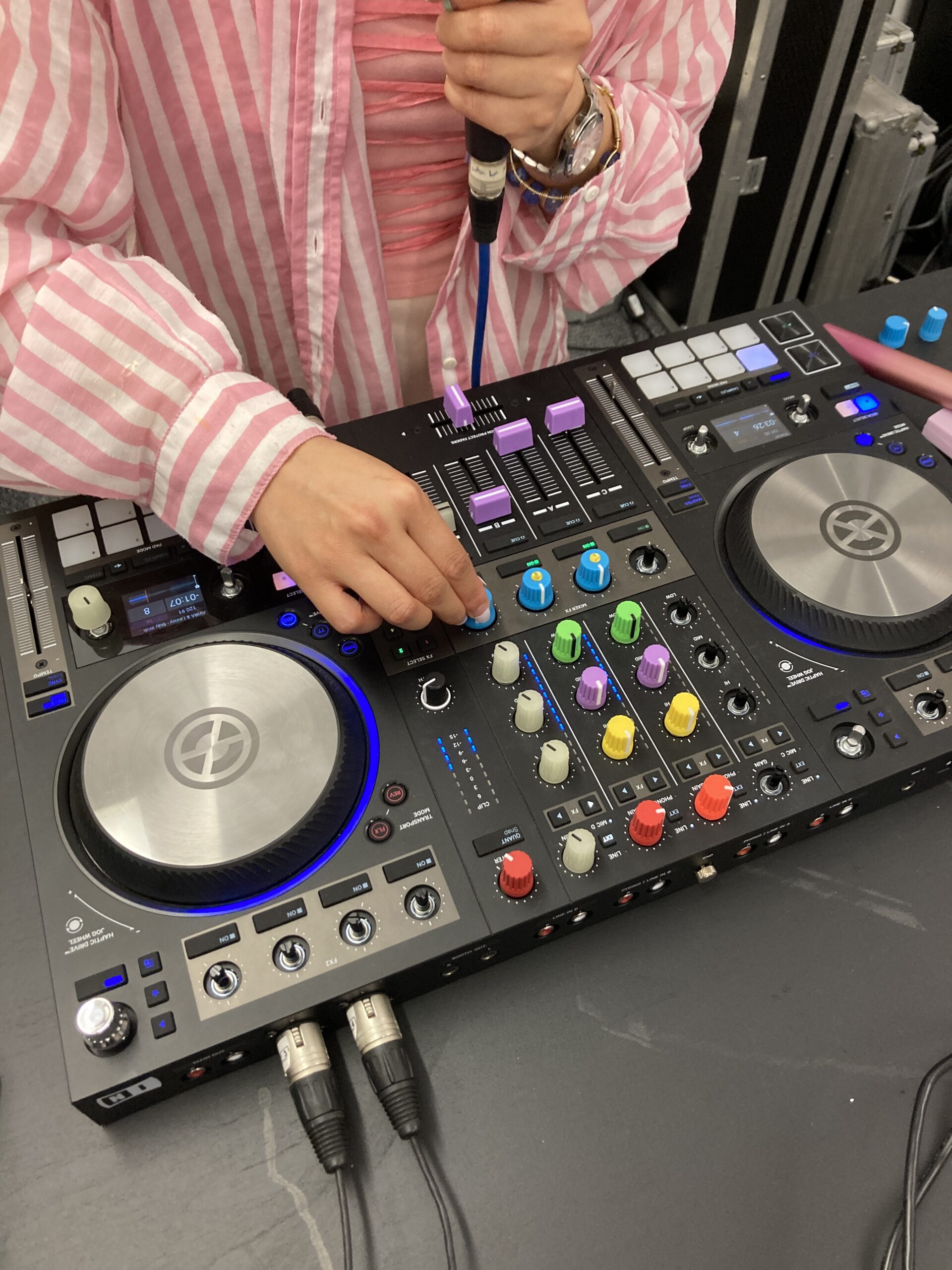
Figure 1: Example of arrangement of coloured caps on the TRAKTOR Kontrol S4 MK2.
The ease of ordering and changing colours, and the variety of options available, can allow DJs to personalise their set-up to suit their needs and preferences. Coloured caps also highlight how a small and inexpensive adjustment to hardware design can have a positive impact.
When we were playing around with the caps, it became clear that for some of our participants, there was no need to replace all the knobs and faders, and some chose to leave several of them capless. This helped with reducing the overwhelm that could be caused by the system’s multiple buttons and functions. Similar sentiments were also raised by Sha in her interview:
Before, it just looked like a spaceship, and I was just looking at it like yeah I’m not touching any of those buttons!
For Sha, the first impression of DJ decks was one of intimidation. This reaction is common among new DJs, often due to the high number of different buttons, faders and knobs, each serving different and sometimes multiple functions. One solution to reducing overwhelm and cognitive load may be to take off any caps that are not immediately being used.
Design
The appearance of DJ hardware is part of its overall design. The ways in which DJ hardware is designed means that there are some functions that can be out of reach for those who experience barriers affecting mobility and dexterity. This was described by Jake Smith, a DJ from Cheshire who uses a wheelchair and has Cerebral Palsy:
If I can’t reach certain buttons on the decks, there are two specific buttons named ‘track search’ which mean I don’t have to search through an entire playlist. When I set up my playlist, instead of having to reach over, I am able to just use the track search buttons. This allows me to easily move on to the next track.
Jake can play in a way that reduces the need to use buttons that he cannot reach. His example also points to physical barriers that can prevent some Disabled DJs from using certain functions. For instance, some models require to hold down a ‘shift’ button to access certain features, a movement which might not be accessible to DJs experiencing dexterity barriers. Although Jake was able to adapt his process to maintain performance flow, there is potential for DJ technology developers to adjust hardware design to promote better access to essential functions, such as track selection.
Physical robustness and portability
The design of hardware can also affect how easy it is to transport. Disabled DJs often bring their own systems when performing at a venue, rather than use the in-house systems. This is because, as mentioned above, Disabled DJs often customise their set-up by connecting to additional controllers, and this is not always possible with in-house systems. As a result, the robustness of the hardware can be an important factor for Disabled DJs, so that transporting the gear does not risk damaging it. To Gemma, a robust system was also important because her Cerebral Palsy could sometimes make her movements jerky:
I think it was important to have hardware that was quite robust, and would take a bit of a battering. When I was looking at what decks to get, I would look at what decks are gonna be able to take a bit of a battering, because some are more delicate than others.
A robust system can handle rougher treatment, and for Gemma, this was an important consideration when deciding on what system to buy.
In addition to robustness, size and weight can affect the portability of hardware, and these dimensions were raised as important for improving accessibility, especially to DJs who experience physical barriers. Smaller, lighter models can help overcome these barriers. However, there can be a trade-off between heavy and robust units that are awkward to carry, and lighter, more delicate units at greater risk of damage. Navigating this trade-off can limit the options of suitable hardware available to Disabled DJs.
To summarise, several key outcomes for hardware emerged across our interviews:
- Disabled DJs often creatively customise their set-up to either improve access or incorporate additional creative elements.
- Adjusting the appearance and colour of hardware can support executive function and reduce cognitive load.
- Balancing robustness and portability is important, to work with gear that can both withstand rougher handling and be easily transported.
- Barriers can intersect across different identities (e.g. gender and disability), and addressing key areas such as colour or customisation can benefit more than just Disabled DJs.
In the next part of this Blog series, we describe how Disabled DJs in our study experienced DJ software and track organisation.